
A walk through India’s protest sites: Understanding regulations in major cities
Over the summer of 2026, protests have increasingly gained media coverage with the emergence of the Cockroach Janata Party and Gen Z's outrage over the paper leaks in the National Eligibility cum Entrance Test (NEET). The Constitution of India guarantees the right to protest through Article 19,
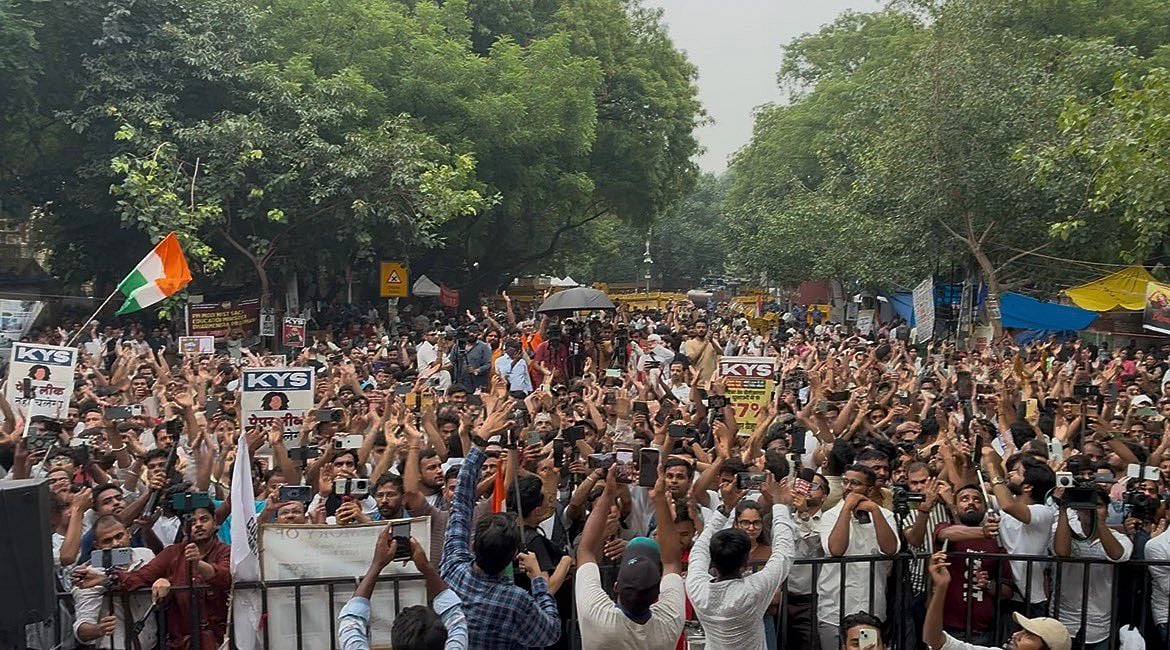
Over the summer of 2026, protests have increasingly gained media coverage with the emergence of the Cockroach Janata Party and Gen Z's outrage over the paper leaks in the National Eligibility cum Entrance Test (NEET). The Constitution of India guarantees the right to protest through Article 19, Sections 1(a) (right to freedom of expression) and 1(b) (right to assemble peacefully). Across the country, protest organisers are expected to get permission from the local police before holding public demonstrations. In the interest of public order and security, the police may impose reasonable restrictions. One common restriction imposed across Indian states is the allocation of specific protest sites in each city. Protest sites in India are often picked to avoid public nuisance and, at times, to restrict the size of protests through the location, venue, or legislation. That, along with the emergency provisions (Section 163 of the Bharatiya Nyaya Sanhita) used by the police, allows the State to control protests. It is notable that the courts have expressed concern over the use of such provisions, as the ambiguous language of Section 163 could mean it is exploited to impose blanket bans against peaceful protests.Here is a look at the protest sites allotted in major cities across India:BengaluruIn Bengaluru, protests are currently limited to a specific part of Freedom Park, located in Gandhi Nagar. Freedom Park used to be the Central Prison of Bengaluru until 2000, when the prison was relocated to Parappana Agrahara on Hosa Road. In late 2008, a small portion of Freedom Park opened to the public for protest movements, dharnas, and rallies.Freedom Park's designated protest area restricts gatherings to about 400 people at mostDuring the recent Cockroach Janata Party protests, many protesters spilled onto the sidewalks due to the awkward dimensions of the ground.Protesters must get permission and conduct protests at Freedom Park, with no exceptions. In August 2022, around 72 farmers from Devanahalli were arrested for protesting outside Freedom Park. The location limits protests to people who can reach it or who can afford to take the time to travel into the city, and takes away from protests that may concern a particular area, such as the Junnasandra Lake protests in 2021.MumbaiMumbai's designated protest spot is Azad Maidan, located in Fort, South Mumbai. Protesters must get permission prior to any gathering, and protests must only run from 9.00 am to 6.00 pm. exclusively on working days, at a maximum of 5,000 people. On top of these restrictions, hunger strikes are not allowed, inflammatory language is prohibited, and loudspeakers require separate permission.However, following recent events in Delhi, Mumbai police invoked Section 37 of the Maharashtra Police Act to issue prohibitory orders restricting movement and "unlawful gatherings of five people or more". These orders came into effect on July 23 and will last until August 6.Mumbai police alleged that they received information from various sources anticipating a breach of peace, and that these are preventive measures. Police presence has also reportedly increased in Mumbai to prevent any gatherings or protests.DelhiIn Delhi, Jantar Mantar is the only designated location for protests and gatherings. Protests require prior permission from Delhi Police and have a strict participant cap of 1,000 people. According to regulations, protesters must congregate and disperse quickly, as marches, rallies, and gatherings on roads or in any place outside Jantar Mantar are prohibited.Chennai, Pune, and KochiChennai, Pune, and Kochi do not have designated protest spots. However, they require prior permission, and protests should not obstruct traffic or disturb public peace.In Chennai, while Swami Sivananda Salai in Triplicane is the usual protest site, protests also happen on grounds and at political party headquarters, depending on the issue and permissions.In Pune, areas such as near the district collector's office and UTS Chowk are usually places where permission is given.In Kochi, protests in public places are allowed as long as they do not obstruct or impede movement. This article was written by a student interning with TNM.