
How failure to destroy juvenile crime records is hurting children’s rehabilitation
In India, recruitment drives for the armed forces, central paramilitary forces, and state police organisations often see qualified candidates suddenly disqualified during background checks. In most instances, the issue is not an adult criminal record but rather a childhood infraction that comes to l
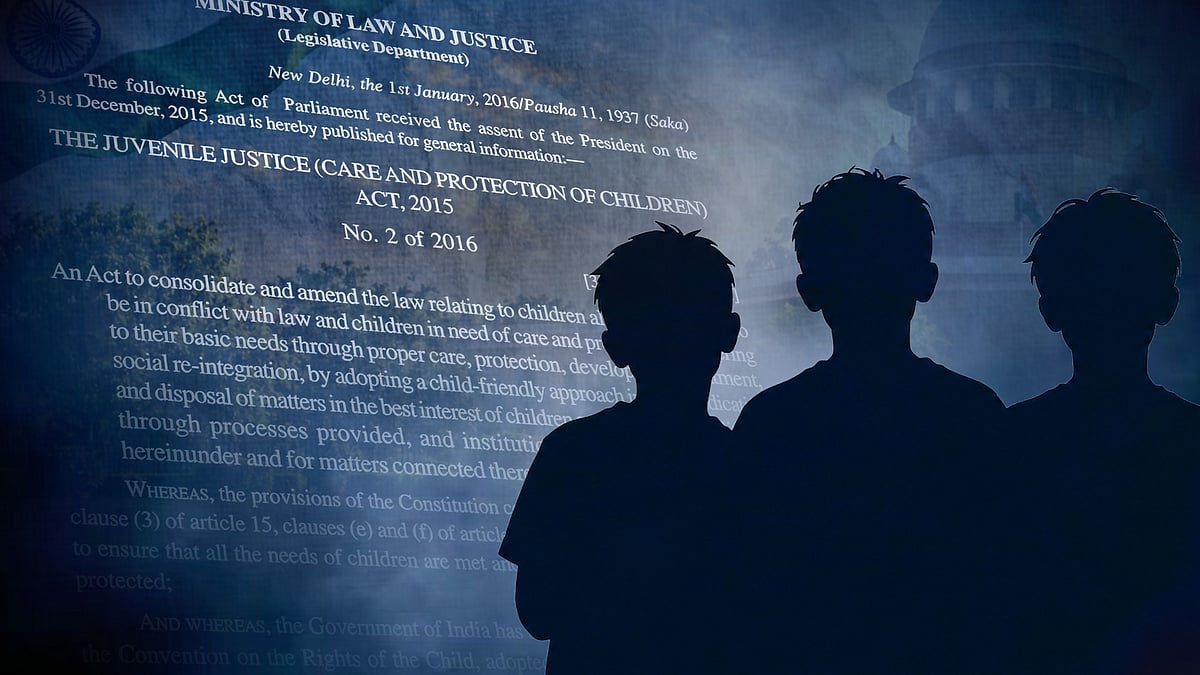
In India, recruitment drives for the armed forces, central paramilitary forces, and state police organisations often see qualified candidates suddenly disqualified during background checks. In most instances, the issue is not an adult criminal record but rather a childhood infraction that comes to light and derails their careers before they even begin. In one such case I worked on, a candidate cleared the recruitment process and joined constable training in a Central Armed Police Force (CAPF). After joining, he was required to fill out a verification form revealing his criminal antecedents. He bonafidely omitted the details, as the record was old and related to him as a minor. Eventually, during the candidate antecedent check, authorities discovered he was involved in a street scuffle as a minor and faced a criminal charge. Consequently, the recruiting authority cancelled his appointment because a criminal case was registered against him in the past. For youths from rural and working-class backgrounds, uniformed jobs are not simply employment but a pillar for them and their families to gain social leverage, protection and class mobility in their societies. Disqualifying them over closed juvenile cases, when statutory law mandates the destruction of such records, undercuts the rehabilitative and restorative idea of juvenile justice. Section 3(xiv) of the Juvenile Justice (Care and Protection of Children) Act (2015), referred to in short as the JJ Act, establishes the core principle of a fresh start, which advocates that a child in conflict with the law (CCL) should be given an opportunity to begin fresh without any social stigma. In addition, the United Nations Convention on the Rights of the Child (UNCRC), through Article 16 (Right to privacy) and Article 40 (Administration of juvenile justice), supports the principle of a fresh start for CCLs. However, a gap exists between the law and administrative reality. Juvenile Justice Boards (JJBs) and children's courts often fail to issue the mandatory order to the police and registry to destroy conviction records after the prescribed period. As a result, these records remain in court cabinets, police station records, and, with developing infrastructure, in the digital records of the Crime and Criminal Tracking Network & Systems (CCTNS). This article examines the relevant law and key judicial rulings on institutional gatekeepers' obligation to destroy juvenile records in a timely manner under the JJ Act. It emphasises that failing to do so violates constitutional rights to privacy and the right to be forgotten, and calls for reforms to strengthen juvenile justice with some recommendations. The law and its mandateDestroying the records of a child in conflict with the law is not a matter of administrative discretion. It is a clear statutory requirement under the JJ Act, barring a narrow exception which applies to children aged 16 to 18 who are tried as adults for serious offences before a Children’s Court under section 19(1)(i). For all other CCLs, record expungement is unconditional and universal. Section 24(1) explicitly removes any disqualification that might otherwise result from a finding under another law. To ensure the practical application of this immunity, section 24(2) directs the Juvenile Justice Board to order the police and the Children's Court to ensure the destruction of all conviction records once the appeal window has closed. In addition, Rule 14 of the JJ Model Rules (2016) outlines the operational procedures. It states that case dockets may be retained in secure custody only until the appeal window closes or for a maximum of seven years, and not longer. It requires the JJB or custodian to destroy those files once the seven-year period has elapsed. It also requires removing identifying entries from police registers, nominal rolls, and station diaries. Furthermore, section 74(2) explicitly prohibits “the police from disclosing any record of the child for the purpose of a character certificate or otherwise in cases where the case has been closed or disposed of.” Judicial precedence The Supreme Court and various high courts have consistently taken a reformative approach. They have emphasised that offences committed while the individual is a minor cannot be grounds for denying or cancelling public employment. The judiciary has strongly enforced the “principle of fresh start” through its various landmark rulings. In Union of India vs Ramesh Bishnoi (2019), the Supreme Court overturned the cancellation of a candidate's appointment as Sub-Inspector in the Central Industrial Security Forces (CISF). The court referred to section 3(xiv) of the JJ Act and observed that there is no stigma attached to any crime committed by such a person as a juvenile, and the clear objective is to reintegrate such a juvenile back into society without any stigma. The Supreme Court reaffirmed its stance in Lokesh Kumar vs State of Chhattisgarh & Anr. (2025), observing that the JJ Act provides a reformative and protective nature, and a child should not suffer disqualification due to conviction under this Act. The court referred to section 24, which talks about destroying the record after a certain period, and highlighted that the law intended a fresh start for juveniles, and their past should not hinder a juvenile’s future. Even high courts have emphasised this doctrine. In Suresh Kumar vs Union of India (2025), the Rajasthan High Court determined that the “right to be forgotten” for juveniles, by the destruction of juvenile delinquency records, is absolute and has to be given full meaning by the state. It also observed that "for the welfare of a child, the burden of past mistakes must be lifted, offering him a fresh start to thrive, free from the weight of stigma; shadows of past transgressions should be expunged.” The Gauhati High Court's Itanagar Bench in Dejo Karga vs State of Arunachal Pradesh (2025) quashed the termination order of the petitioner and observed that the protective mandate of section 24 of the JJ Act prohibits a juvenile record from hampering future prospects and is required to be upheld in letter and spirit. Right to privacy Infinite retention of juvenile records breaches the fundamental right to privacy. Under the four-fold proportionality test established by the Supreme Court in the case of Justice KS Puttaswamy (Retd) vs Union of India (2017), it was held that the state's retention of personal data must meet four criteria: legality, legitimate aim, suitability, and proportionality. Retaining juvenile records fails to satisfy all these criteria: it breaches the seven-year statutory limit set by Rule 14, lacks any legitimate public objective after a juvenile’s rehabilitation, and causes disproportionate harm by blocking access to public employment. Moreover, this practice breaches the Digital Personal Data Protection (DPDP) Act of 2023. As per section 2(i), police departments, JJBs, and judicial registries are classified as "data fiduciaries”. Section 8(7) of the DPDP Act requires that a data fiduciary must erase personal data as soon as the purpose for which it was collected has been fulfilled. The legal purpose of processing a juvenile’s information is strictly limited to inquiry and rehabilitation. Once the seven-year retention limit is reached, that purpose is considered legally exhausted. Retaining these digital records on active CCTNS servers violates section 8(7) and infringes upon the individual’s right to erasure under section 12(3). Public authorities cannot invoke general law enforcement exemptions under section 17, as those exemptions apply only to data processing conducted strictly in accordance with the law. Field observations from Assam In Assam, district courts and JJBs face administrative issues in managing CCL records. When an inquiry begins, the police register the FIR or General Diary Entry in station registers and synchronise it with the CCTNS. However, on disposal — whether by admonition, probation or acquittal — the JJB rarely issues an explicit order under section 24(2) to destroy records in the police or court registry.At the ground level, the issue stems from both unawareness and institutional hesitancy. Without standardised operational guidance, lower-court registries and JJB staff view record destruction as irreversible, fearing procedural audits or accusations of unauthorised activities.Inaction becomes the defensive approach. Consequently, the information remains in the system. When local officers run antecedent verification against unpurged station databases, they transmit past juvenile details to recruitment authorities, who are often unfamiliar with juvenile justice laws and may interpret this entry as automatic disqualification. Possible solutions Addressing these operational gaps requires coordinated, structured action from three main institutions: the judiciary, the state police, and the Department of Personnel and Training (DoPT). The High Court Juvenile Justice Committee can get an official high court notification issuing uniform procedural directions to all districts and create district-level record destruction committees, for example, a committee comprising the chief judicial magistrate, the JJB's social worker member, the court registrar, and the chief record keeper, to conduct quarterly reviews and destroy records that have reached the statutory limit. The state police and the State Crime Records Bureau (SCRB) can implement technical safeguards within CCTNS that automatically delete closed juvenile cases after seven years. Further, departmental standing orders can be issued to establish that the disclosure of juvenile information for character verification violates section 74(2) of the JJ Act, apart from legal exceptions, and can attract disciplinary action. Recruitment boards and the DoPT need to amend and update their attestation forms for state-level jobs. These forms should include a specific exemption stating that “applicants are not required to disclose any enquiries, detentions, or adjudication governed by the Juvenile Justice Act.” State governments can issue binding administrative guidelines instructing screening committees not to disqualify candidates based on childhood infractions. This would integrate the rulings of Ramesh Bishnoi and Lokesh Kumar into the public recruitment process. State-level bodies could conduct capacity building for child rights stakeholders, including judicial academies, NIPCCD, and state police academies. Further, they can identify and develop inter-agency modules that require joint training for judges, police, and court administrative staff on secure record-disposal protocols, alongside child rights jurisprudence. The statutory promise of a fresh start is fundamental to the juvenile justice framework. Allowing closed files and unpurged digital records to follow young citizens into adulthood transforms a tool meant for rehabilitation into a form of lifelong punishment. By taking these progressive steps, we convert the legal commitments into clear evidence that the system is truly operating in the best interest of the child, in both letter and spirit. Krishna Aruna Sharma is an advocate and independent child protection consultant based in Guwahati, Assam Views expressed are the author’s own.