
Reading Kamila, Shabnam Noorjahan's controversial novel on an atheist who embraced Sufism
A few pages into Shabnam Noorjahan’s Kamila: Rumiyude Pranayi is a passage about a dream that scares the protagonist, but from which she wakes up in peace, because by the end of it, Lord Siva comes to save her from mysterious creatures. Kamila, the protagonist of Shabnam’s novel, is surprised and be
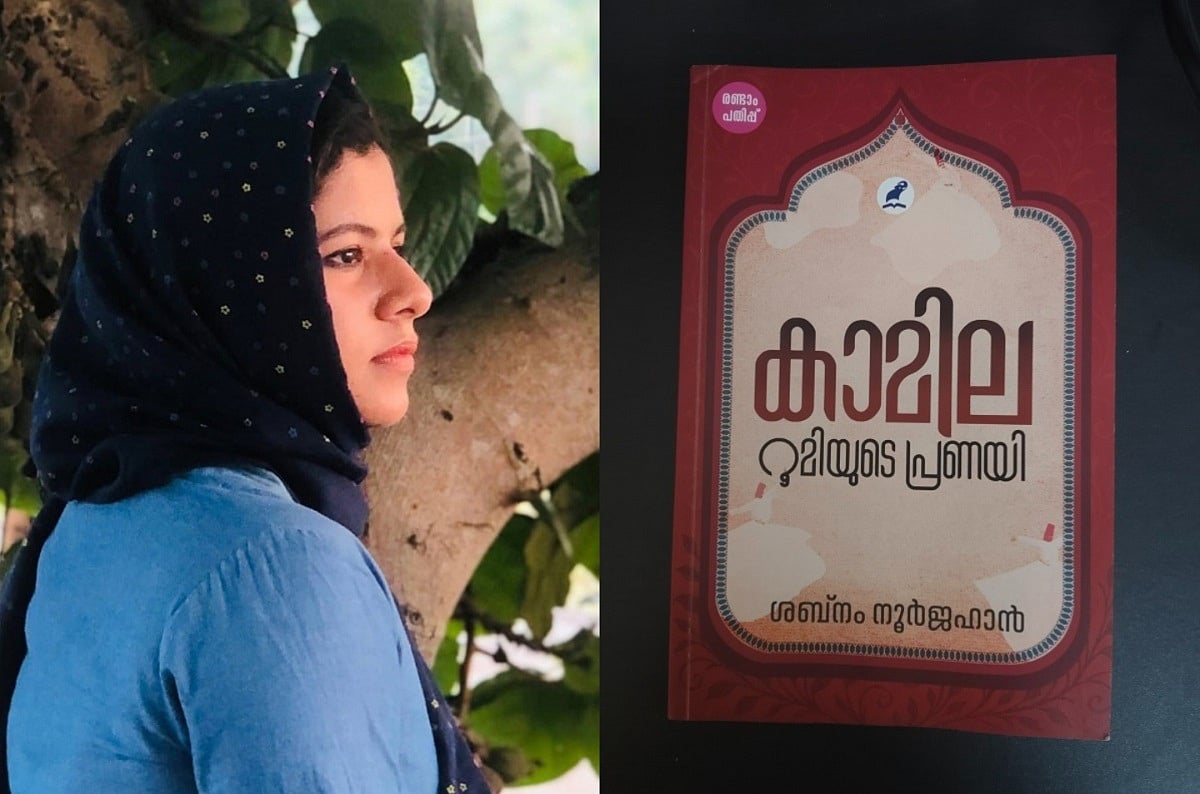
A few pages into Shabnam Noorjahan’s Kamila: Rumiyude Pranayi is a passage about a dream that scares the protagonist, but from which she wakes up in peace, because by the end of it, Lord Siva comes to save her from mysterious creatures. Kamila, the protagonist of Shabnam’s novel, is surprised and bemused that a Muslim like her was comforted by a dream about a Hindu god but also ashamed that an atheist like her dreamt of any god at all. You wonder if it were lines like these or the premise of a Muslim woman finding faith in Sufism that drew Shabnam into unexpected controversies in the past few months. Kamila is the second book by Shabnam, an assistant professor of Zoology in Kozhikode of Keralam, who is now a prominent presence in television panels discussing patriarchy in religion. Her voice, speaking staunchly against the discrimination shown towards Muslim women from within the community, was sought after following a statement she made against a diktat by the religious leader Kanthapuram AP Aboobacker Musliar. He had infamously issued a directive prohibiting the presence of Muslim women among men they are not related to in public gatherings. Shabnam, knowledgeable and articulate in her responses, brought up the Constitution every time as the book of the highest authority in the country. However, she said that the usual response in social media, of viciously attacking a woman who speaks her opinion, was triggered not by her statement on Kanthapuram, but by her book Kamila. Kamila, beginning with a poetic preface from the author, flips between the philosophical and the mundane. A Muslim woman, married and with children and so far living by the rules and the expectations of those around her, suddenly talks about a trip she wants to take alone, away from everyone and everything she knows. Her husband is alarmed but books her a package tour to Iran so that she will always be with people. Kamila does not care about the destination as long as she can go in search of the answers to her many questions about life and faith and relationships. The moods of Kamila swing between the melancholy of hazy ruminations and the joy of new friendships. A doctor who is a believer, an atheist, a happy-go-lucky woman are all in the new circle of people she is enclosed by. The book, in these early pages, reads like a travelogue as she describes the beauty of unknown lands and the company of new characters. Kamila, who had seemed lost, perks up as conversations emerge between the doctor, the atheist, and herself on matters of faith. Then there is Vaiga, a woman whose philosophy in life is to get the most fun out of it, taking Kamila under her wings, like a protective sister. The friendship that grows between them is a joy to read, for Vaiga seems the most genuine human among all the serious men around them, with their profound monologues and know-it-all preaching. Her unpolished everyday language, indifference to matters that do not interest her, and unfiltered joy become endearing, and make up the most enjoyable part of the novel. View this post on Instagram In direct contrast is a character called Jalali, entering the travelling party and all too quickly becoming everything Kamila had set out in search of. The exchanges between them turn into preachings from an all-knowing Jalali to the wonderstruck Kamila. He sounds more like a teacher than a lover, even as he occasionally slips into the robe of an ordinary man who loves to cook, is cheesy about romance, and unapologetic about keeping a big house. The magic spell that lures Kamila here, is Sufism, a way of life and faith that she learns in this all-consuming journey and brings her closer to Jalali. Doubts creep in about the man, but not about the faith. But Jalali’s character becomes the most outspoken critic of the orthodoxy of ‘purohitar’ (religious leaders), reflecting some of the author’s own criticism of the powerful clerics. Jalali says that clerics of all times have always chosen not to hear or learn any [teaching] that is not theirs, which means that they discourage thought and intellect. Jalali also attributes the enforcement of hijab to the priestly class. “Since [Islamic] priesthood has always remained male-centric, they could rule over the women. That is the reason women are forced to wear the clothes they wore centuries ago.” Kamila’s mother is more upset by her photo on social media, that showed her without a hijab, than by the daughter’s decision to travel alone. Although Jalali is also put off by her choice to make her personal life public, he speaks strongly about the use of hijab as a continued exploitation of women by the clergy. View this post on Instagram In her public appearances, Shabnam has stuck to her hijab but strongly advocates against the use of niqab that covers the face of Muslim women, arguing that it would be offensive to the person sitting next to her. Appreciably, Shabnam makes no effort to justify Kamila’s choices. The author does not paint a bad picture of the husband back home. His pleas for her return come from love. He even sends a disclaimer that he had nothing to do with a harsh missive that will reach her from her parents. It might have been this, the dismissal of the questions of morality surrounding a woman who leaves her family for another, or it might have been the embracing of Sufism that angered the critics, who turned abusive on social media. Even the decision of a woman, expected to follow conventions, to travel alone would be frowned upon by conservatives. Shabnam has stated more than once that what she wrote is fiction. Her characters need not share her views. Without the bluntness of Jalali’s criticism, Shabnam still manages to reproach the ways in which religious leaders issue diktats that continue to violate the rights of Muslim women.