
Three lab-grown brain organoids outperform one in a Braille experiment; Bristol researchers explore a new path to biohybrid computing
Scientists at the University of Bristol have used lab-grown brain organoids to identify electrical signals corresponding to Braille letters. Connected to a tactile sensor, the mini neural networks achieved 61% recognition accuracy individually, rising to 83% when three organoids were combined. Publi
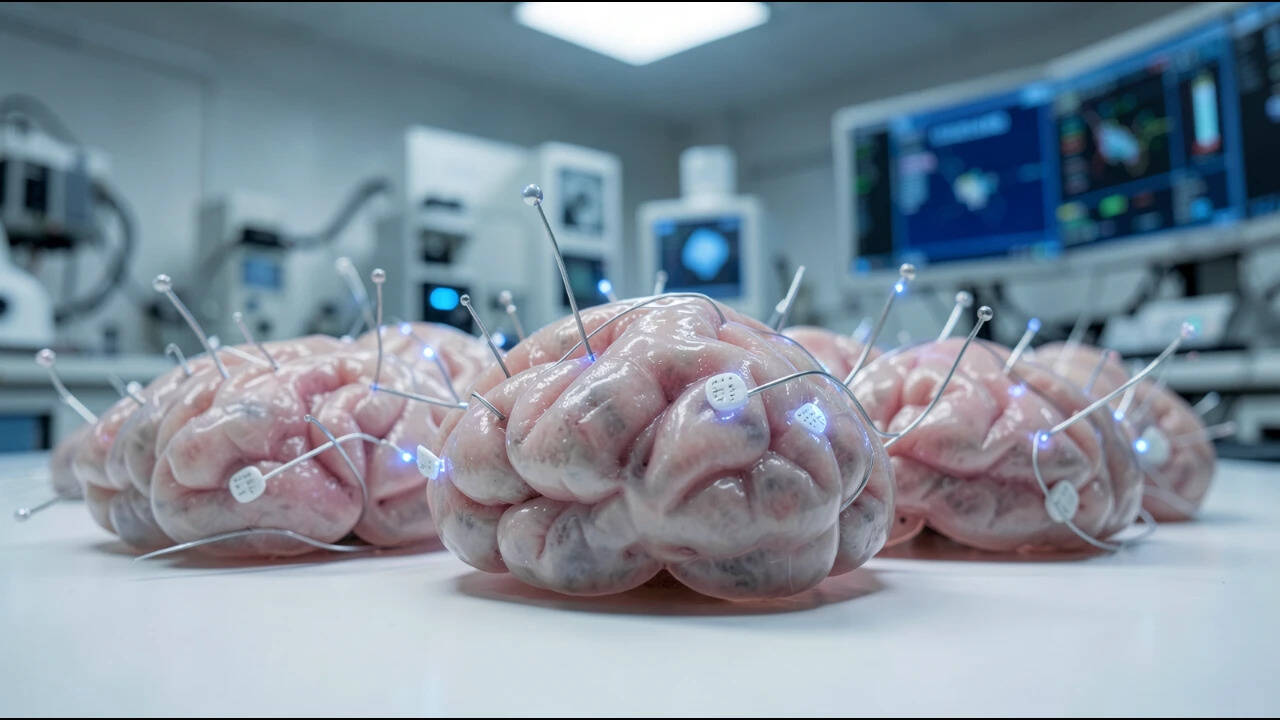
Scientists at the University of Bristol have used lab-grown brain organoids to identify electrical signals corresponding to Braille letters. Connected to a tactile sensor, the mini neural networks achieved 61% recognition accuracy individually, rising to 83% when three organoids were combined. Published in Frontiers in Artificial Intelligence, the study explores the potential of biohybrid computing, which combines living neural networks with electronic systems. Researchers hope to test more complex sensory information and feedback-based learning.
Read the complete story at TOI Education